

Take Back Control,
Gain Momentum, and Build
a Multi-Generational Legacy.
The financial system was built to profit from your capital, not build it. We’ll show you the exit.
#1 Life Insurance Agency on Trustpilot · TrustScore 5.0 · 302 reviewsOur trusted partners.
Top-rated carriers only. We work for you, not for them.












What we build
Our Services
Most firms sell you a policy and move on. We build a system with you and stay in it. Through high-performance Whole Life and Indexed Universal Life structures, we help you take control of your capital: eliminating debt, accelerating wealth, and building a legacy that actually transfers to the next generation.

Whole Life Insurance & Infinite Banking
Life Insurance
We specialize in High Cash Value Whole Life and Indexed Universal Life designed for one purpose: to be your Private Banking System.
More Info
Life Insurance with LTC/Chronic Illness Rider
Long Term Care Insurance
One extended health event can erase decades of wealth building. We move beyond traditional use-it-or-lose-it policies, focusing on Hybrid Long-Term Care solutions that protect your assets, provide living benefits, and still leave something behind for your heirs.
More Info
Guaranteed Lifetime Income
Annuities
Our annuity strategies create a guaranteed income stream you cannot outlive, removing the fear of running out of money so the rest of your assets can keep growing.
More InfoOur process.
Start HereThe system is designed to keep you in the middle. We show you the exit.
The Library
The financial system was built to extract your wealth. We built you a free library of targeted guides to show you the exit. Pick the exact playbook for your financial stage before we ever run your numbers.
Start HereThe Fit Call
Because our guides do the teaching, our experts never pitch. In this brief call, we simply run your actual numbers to see if these strategies mathematically work for your unique financial situation.
Connect with an ExpertCustom Architecture
Most agents trap you in "standard policies" (50/50) to maximize their commissions. We do the exact opposite: designing custom (90/10) policies for rapid cash-value growth and immediate liquidity.
Generational Wealth
You are now the bank. Your capital compounds tax-free while simultaneously financing your real estate, business, and lifestyle. You control the velocity of your money, securing true financial sovereignty.
Watch the Strategy Explained
Whiteboard breakdowns, straight answers, and the questions everyone asks about whole life insurance and infinite banking. New videos every week on our channel.
Be Your Own Banker: 6 Steps
Dividend Whole Life in 15 Minutes
How To Be Your Own Bank
Our clients’ journeys.
#1 of 22 best companies in Life Insurance Agency on TrustpilotBarry Brooksby is the real deal. In a world full of salespeople, Barry stands out as a genuine educator, advisor, and steward of long-term wealth planning. His patience, integrity, and depth of knowledge immediately inspire confidence. Every interaction has been professional, transparent, and educational. His team, especially his administrative assistant, has been fantastic to work with as well. I'm currently reading Barry's new book, Live Rich, Die Rich, and it reflects the same wisdom and practical guidance that he brings to his clients. We trust Barry enough that we're already looking at similar planning strategies for our children. That's probably the strongest endorsement we can give. Highly recommended.
Joey · June 5, 2026
Barry is one of a kind. During our one-to-one meetings, I found him to be as warm, personably, and diligent as he is portrayed in his dozens of YT videos. He patiently listened to my needs and offered thoughtful (not cookie-cutter) suggestions. He has tons of experience and loves to help others find their path to financial freedom. Highly, highly recommend him.
Nov 16, 2025
I don't think I have ever met anyone more patient and professional than Barry Brooksby. It was very hard for me to understand some of the IBC concept, and I almost gave up on it. Every time I emailed or called Barry, he would patiently and calmly reiterate the information and go further to reference some of his videos or links.
J.Canchola · Jun 12, 2025
After reading about the Infinite Banking Concept (IBC), I decided to adopt the concept. But I needed to find the right policy for my goal. Luckily I found Barry Brooksby. Mr. Brooksby created a whole life policy which complied with the concept and excelled at creating cash value in accordance with the IBC. He is knowledgeable and a patient explainer of how whole life works and how to make sure I was buying the best policy. He helped me with the application process. I couldn't have asked for a better guide. It was a great experience. If you are in the market for whole life, I highly recommend Mr. Brooksby and his team.
James Mitchell · June 5, 2026
Barry Brooksby is a standout expert and a true advocate for anyone looking to master their finances. Between his incredible educational resources at InsuranceAndEstates.com and his leadership at Focus Wealth Group, Barry provides a level of clarity and service that is hard to find elsewhere. He is a gifted communicator and a master teacher of the trade. Barry doesn't just provide a service; he ensures you understand the 'why' behind every strategy. He is accessible, honest, and deeply customer-oriented, always making sure you feel supported and informed. If you want to work with an industry expert who operates with total integrity and treats your goals as his own, I highly recommend Barry Brooksby. Whether you are just starting to learn at Insurance and Estates or ready to take action with Focus Wealth Group, you are in the best possible hands.
Todd Alexander · May 14, 2026
Barry was wonderful to deal with. Educational first! That's his goal and he definitely delivers as much education and support as is needed. Highly recommended for guidance and advising.
CL · Apr 30, 2026
Barry Brooksby is the real deal. In a world full of salespeople, Barry stands out as a genuine educator, advisor, and steward of long-term wealth planning. His patience, integrity, and depth of knowledge immediately inspire confidence. Every interaction has been professional, transparent, and educational. His team, especially his administrative assistant, has been fantastic to work with as well. I'm currently reading Barry's new book, Live Rich, Die Rich, and it reflects the same wisdom and practical guidance that he brings to his clients. We trust Barry enough that we're already looking at similar planning strategies for our children. That's probably the strongest endorsement we can give. Highly recommended.
Joey · June 5, 2026
Barry is one of a kind. During our one-to-one meetings, I found him to be as warm, personably, and diligent as he is portrayed in his dozens of YT videos. He patiently listened to my needs and offered thoughtful (not cookie-cutter) suggestions. He has tons of experience and loves to help others find their path to financial freedom. Highly, highly recommend him.
Nov 16, 2025
I don't think I have ever met anyone more patient and professional than Barry Brooksby. It was very hard for me to understand some of the IBC concept, and I almost gave up on it. Every time I emailed or called Barry, he would patiently and calmly reiterate the information and go further to reference some of his videos or links.
J.Canchola · Jun 12, 2025
After reading about the Infinite Banking Concept (IBC), I decided to adopt the concept. But I needed to find the right policy for my goal. Luckily I found Barry Brooksby. Mr. Brooksby created a whole life policy which complied with the concept and excelled at creating cash value in accordance with the IBC. He is knowledgeable and a patient explainer of how whole life works and how to make sure I was buying the best policy. He helped me with the application process. I couldn't have asked for a better guide. It was a great experience. If you are in the market for whole life, I highly recommend Mr. Brooksby and his team.
James Mitchell · June 5, 2026
Barry Brooksby is a standout expert and a true advocate for anyone looking to master their finances. Between his incredible educational resources at InsuranceAndEstates.com and his leadership at Focus Wealth Group, Barry provides a level of clarity and service that is hard to find elsewhere. He is a gifted communicator and a master teacher of the trade. Barry doesn't just provide a service; he ensures you understand the 'why' behind every strategy. He is accessible, honest, and deeply customer-oriented, always making sure you feel supported and informed. If you want to work with an industry expert who operates with total integrity and treats your goals as his own, I highly recommend Barry Brooksby. Whether you are just starting to learn at Insurance and Estates or ready to take action with Focus Wealth Group, you are in the best possible hands.
Todd Alexander · May 14, 2026
Barry was wonderful to deal with. Educational first! That's his goal and he definitely delivers as much education and support as is needed. Highly recommended for guidance and advising.
CL · Apr 30, 2026
Barry was wonderful to deal with. Educational first! That's his goal and he definitely delivers as much education and support as is needed. Highly recommended for guidance and advising.
CL · Apr 30, 2026
Barry Brooksby is a standout expert and a true advocate for anyone looking to master their finances. Between his incredible educational resources at InsuranceAndEstates.com and his leadership at Focus Wealth Group, Barry provides a level of clarity and service that is hard to find elsewhere. He is a gifted communicator and a master teacher of the trade. Barry doesn't just provide a service; he ensures you understand the 'why' behind every strategy. He is accessible, honest, and deeply customer-oriented, always making sure you feel supported and informed. If you want to work with an industry expert who operates with total integrity and treats your goals as his own, I highly recommend Barry Brooksby. Whether you are just starting to learn at Insurance and Estates or ready to take action with Focus Wealth Group, you are in the best possible hands.
Todd Alexander · May 14, 2026
After reading about the Infinite Banking Concept (IBC), I decided to adopt the concept. But I needed to find the right policy for my goal. Luckily I found Barry Brooksby. Mr. Brooksby created a whole life policy which complied with the concept and excelled at creating cash value in accordance with the IBC. He is knowledgeable and a patient explainer of how whole life works and how to make sure I was buying the best policy. He helped me with the application process. I couldn't have asked for a better guide. It was a great experience. If you are in the market for whole life, I highly recommend Mr. Brooksby and his team.
James Mitchell · June 5, 2026
I don't think I have ever met anyone more patient and professional than Barry Brooksby. It was very hard for me to understand some of the IBC concept, and I almost gave up on it. Every time I emailed or called Barry, he would patiently and calmly reiterate the information and go further to reference some of his videos or links.
J.Canchola · Jun 12, 2025
Barry is one of a kind. During our one-to-one meetings, I found him to be as warm, personably, and diligent as he is portrayed in his dozens of YT videos. He patiently listened to my needs and offered thoughtful (not cookie-cutter) suggestions. He has tons of experience and loves to help others find their path to financial freedom. Highly, highly recommend him.
Nov 16, 2025
Barry Brooksby is the real deal. In a world full of salespeople, Barry stands out as a genuine educator, advisor, and steward of long-term wealth planning. His patience, integrity, and depth of knowledge immediately inspire confidence. Every interaction has been professional, transparent, and educational. His team, especially his administrative assistant, has been fantastic to work with as well. I'm currently reading Barry's new book, Live Rich, Die Rich, and it reflects the same wisdom and practical guidance that he brings to his clients. We trust Barry enough that we're already looking at similar planning strategies for our children. That's probably the strongest endorsement we can give. Highly recommended.
Joey · June 5, 2026
Barry was wonderful to deal with. Educational first! That's his goal and he definitely delivers as much education and support as is needed. Highly recommended for guidance and advising.
CL · Apr 30, 2026
Barry Brooksby is a standout expert and a true advocate for anyone looking to master their finances. Between his incredible educational resources at InsuranceAndEstates.com and his leadership at Focus Wealth Group, Barry provides a level of clarity and service that is hard to find elsewhere. He is a gifted communicator and a master teacher of the trade. Barry doesn't just provide a service; he ensures you understand the 'why' behind every strategy. He is accessible, honest, and deeply customer-oriented, always making sure you feel supported and informed. If you want to work with an industry expert who operates with total integrity and treats your goals as his own, I highly recommend Barry Brooksby. Whether you are just starting to learn at Insurance and Estates or ready to take action with Focus Wealth Group, you are in the best possible hands.
Todd Alexander · May 14, 2026
After reading about the Infinite Banking Concept (IBC), I decided to adopt the concept. But I needed to find the right policy for my goal. Luckily I found Barry Brooksby. Mr. Brooksby created a whole life policy which complied with the concept and excelled at creating cash value in accordance with the IBC. He is knowledgeable and a patient explainer of how whole life works and how to make sure I was buying the best policy. He helped me with the application process. I couldn't have asked for a better guide. It was a great experience. If you are in the market for whole life, I highly recommend Mr. Brooksby and his team.
James Mitchell · June 5, 2026
I don't think I have ever met anyone more patient and professional than Barry Brooksby. It was very hard for me to understand some of the IBC concept, and I almost gave up on it. Every time I emailed or called Barry, he would patiently and calmly reiterate the information and go further to reference some of his videos or links.
J.Canchola · Jun 12, 2025
Barry is one of a kind. During our one-to-one meetings, I found him to be as warm, personably, and diligent as he is portrayed in his dozens of YT videos. He patiently listened to my needs and offered thoughtful (not cookie-cutter) suggestions. He has tons of experience and loves to help others find their path to financial freedom. Highly, highly recommend him.
Nov 16, 2025
Barry Brooksby is the real deal. In a world full of salespeople, Barry stands out as a genuine educator, advisor, and steward of long-term wealth planning. His patience, integrity, and depth of knowledge immediately inspire confidence. Every interaction has been professional, transparent, and educational. His team, especially his administrative assistant, has been fantastic to work with as well. I'm currently reading Barry's new book, Live Rich, Die Rich, and it reflects the same wisdom and practical guidance that he brings to his clients. We trust Barry enough that we're already looking at similar planning strategies for our children. That's probably the strongest endorsement we can give. Highly recommended.
Joey · June 5, 2026
Answers first
Common Questions About Your Financial Infrastructure
Most people arrive here because something about the conventional financial advice they’ve been given doesn’t add up. Good instinct. At Insurance and Estates, we believe the right questions lead to the right decisions, and that nobody should implement a strategy they don’t fully understand. Below are the questions our experts get most often about private banking systems, policy design, and attorney-led legacy planning.
IUL gets sold on the illustration. The illustration shows average returns linked to a market index and those numbers look compelling on paper. The problem is that average returns and actual returns are not the same thing. Volatility eats the average. A 50% loss followed by a 50% gain does not get you back to zero. It leaves you down 25%. That math doesn’t care what the illustration said. And when your banking infrastructure is absorbing that volatility, the entire system becomes unpredictable at the exact moment you need it to be reliable. Whole life does one thing that IUL cannot: it removes the variable entirely. Your banking chassis needs to be boring. The returns you chase with volatility belong in other buckets. The policy is the foundation, not the speculation.
If the policy is designed correctly (and most policies sold in America are not) you should have access to 70–90% of your capital within the first year. The reason most people have never heard this is because most policies are not designed for your benefit. They are designed around the death benefit, which maximizes the agent’s commission and minimizes your liquidity. We flip that. We minimize the death benefit to maximize your accessible cash as fast as possible. The goal is to get your money working for you, not sitting locked inside a contract for years while someone else benefits from the float.
This question assumes the goal is rate of return. It isn’t, and that’s exactly the mindset that keeps most people on the wrong side of the wealth equation.
Banks don’t get rich on interest rates. They get rich on volume, moving enormous amounts of capital through a system they control, collecting the spread on every dollar that passes through. A properly designed whole life policy isn’t competing with the stock market. It’s the infrastructure that makes every other investment decision stronger.
Think about it this way: the wealthy don’t choose between a banking system and the market. They build the infrastructure first, then deploy into assets from a position of strength. Your policy gives you guaranteed, growing, liquid capital you can access without selling positions, without timing the market, and without asking permission. You put that capital to work in real estate, business deals, or yes, even stocks, and your cash value keeps compounding as if you never touched it.
Chasing rate means your money is in one place doing one thing. Volume-Based Banking means your money is in multiple places doing multiple things simultaneously. That’s not a lower return. That’s a fundamentally different and superior use of capital.
The question isn’t “what’s the return on the policy?” The question is “what does my entire financial system return when I have this as the foundation?”
This is where the infrastructure pays off. When you take a policy loan to fund a deal, your cash value does not leave the policy. It stays inside earning dividends and compound growth as if you never touched it. Simultaneously your borrowed capital is out in the world producing returns in real estate, business, or wherever you deploy it. Your money is working in two places at once. This is not a trick or a loophole. It is exactly how the Rockefellers, the Rothschilds, and every major banking family has operated for generations. The bank earns the spread. We are teaching you to be the bank.
Most people with existing whole life policies have no idea what they actually own. The illustration they were shown at the sale is not the same as the contract they signed, and almost nobody reads the contract. A Forensic Policy Review is our process of auditing what you actually have: where the fees are, whether the policy is on track or quietly dying, and whether your cash value is building the way you were told it would. If we find a policy that is underperforming or structurally compromised we can often move it into a properly designed policy through a 1035 exchange with no tax event and no penalty. You do not have to live with a bad policy. You just have to know you have one.
This question usually comes from someone who encountered a poorly designed policy, read a hit piece from someone with a competing product to sell, or heard Dave Ramsey tell them whole life is always a rip-off. We understand the skepticism and frankly the industry has earned some of it.
But let’s be precise. Infinite banking is built on Section 7702 of the IRS tax code, the provision governing cash value life insurance. It has existed for over 100 years. The tax advantages we highlight (tax-free growth, tax-free loans, tax-free death benefit) are not loopholes or gray areas. They are the explicit and intended function of the contract as written by Congress. Banks, corporations, and wealthy families have used these provisions for generations. This is not a secret strategy. It is a systematically ignored one.
Where people get burned is not the strategy. It is the design. A policy built around maximizing the agent’s commission rather than your cash value is a trap. We see the wreckage constantly. Policies bleeding internal costs, cash value years away from being accessible, clients who were sold on an illustration that was never going to match reality. That is a design problem and an agent problem, not a strategy problem. Our entire practice is built around forensic accuracy: designing policies that perform under pressure, not just on paper.
In a standard retail whole life policy, yes. The company pays the face amount and retains the accumulated cash value. That is the default and it is one of the reasons we do not design standard retail policies.
Every policy we build uses an increasing death benefit structure. The face amount you start with is a fraction of the total death benefit. As your cash value grows year over year, the death benefit grows with it. Your beneficiaries do not receive just the original face amount. They receive a death benefit that reflects the full value of what you built over your lifetime, paid out tax-free.
This is not a technicality. It is the architectural difference between a policy designed for the insurance company’s benefit and one designed for yours. The policy should function as a living asset while you are here and as a legacy transfer mechanism when you are gone. That only works if the design accounts for both.
Still have questions?
These answers are a starting point, not a finish line. Every situation is different: your income, your timeline, your existing policies, your goals. If something here sparked a question, or if you’re ready to see exactly what a private banking system would look like for your specific situation, our team is here. No pressure, no pitch, just answers.
Free Download
The Generational Transfer
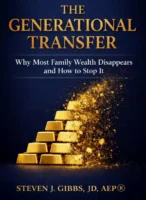
70% of wealthy families lose everything by the second generation. Fewer than 3% of those failures are caused by bad documents. This book is the guide I wish every client had read before they walked into my office.
- Risk in a Litigious Society
- Tactics for Protecting Assets
- Estate Planning Essentials
- The Power of Life Insurance
- Wealth Transfer — The Missing Piece
Free eBook
Get your free copy
Fill this in and we’ll send the ebook straight to your inbox.