Written By: Jason Kenyon, Esq., CEO & Co-Owner of Insurance and Estate Strategies LLC, and Steven Gibbs, JD, AEP®, CPSO & Co-Founder.
Both are licensed attorneys with 15+ years of experience in estate planning and strategic life insurance design.
📖 Estimated Reading Time: 15 minutes
Table of Contents
For the Financial Non-Conformist
If you sense something is fundamentally wrong with conventional financial advice—if you’ve followed the standard playbook yet still feel financially vulnerable—this analysis may provide the alternative perspective you’re seeking.
Volume-Based Banking with The Ultimate Asset represents a different approach based on institutional behavior rather than popular wisdom. If this describes you, read on.
The Ultimate Asset and Volume-Based Banking: A Different Path Forward
When Conventional Financial Advice Produces Consistent Failure
The Financial Reality Most Don’t See
Despite decades of widely available financial advice, accessible investment products, and countless books promising wealth-building secrets, the financial outcomes for American families remain troubling. The statistics reveal a disconnect between what financial advisors promise and what people actually achieve.
The Systematic Failure of Everything You’ve Been Taught
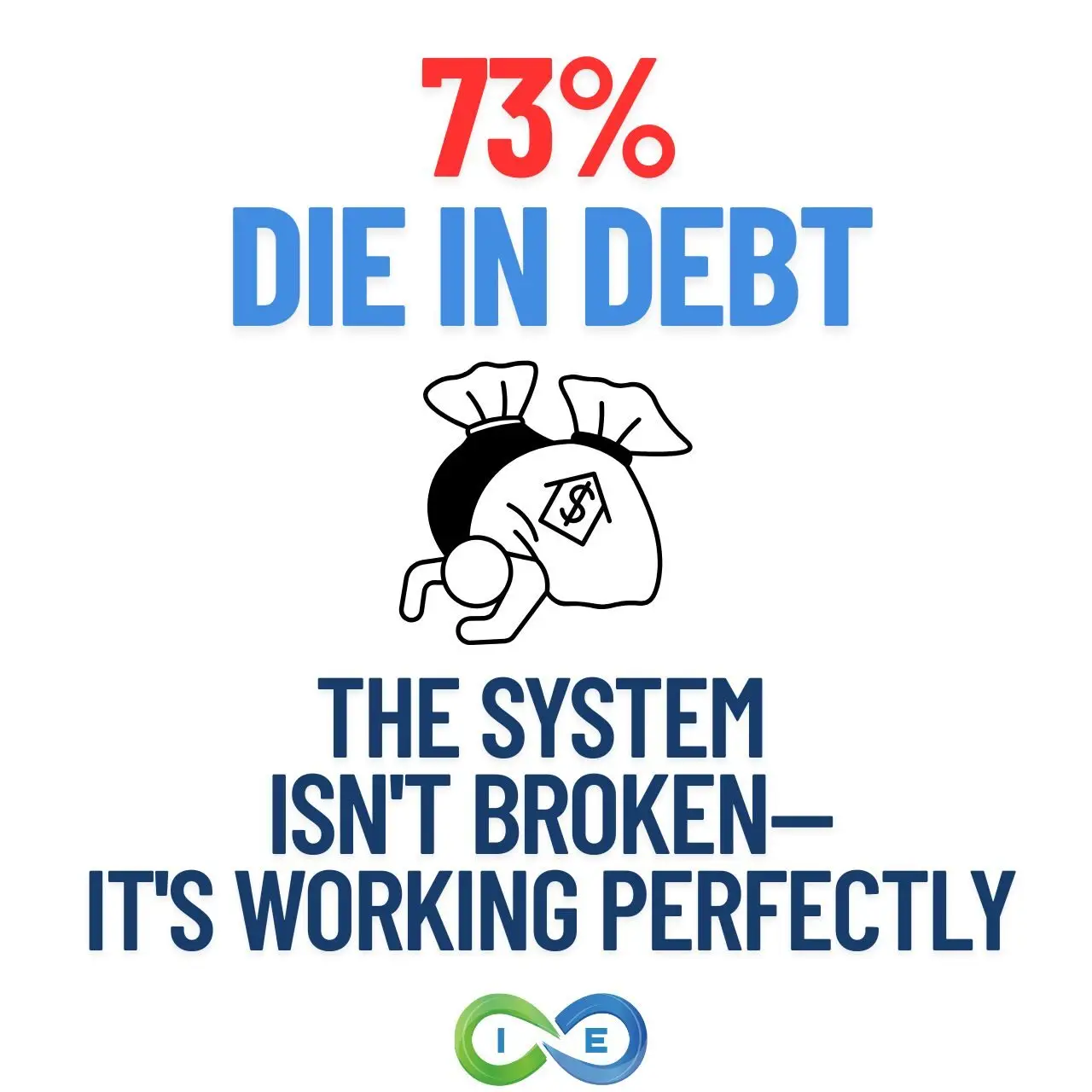
- 73% of Americans die with debt – average $61,554 in outstanding obligations
- 57% live paycheck to paycheck – including families making $100,000+
- $202,000 average Baby Boomer retirement savings – after 40+ years of contributions
- 98% of term policies expire worthless – decades of premiums vanished
- Real investors underperform markets by 3-8% annually – behavioral reality destroys theoretical returns
Nash’s Discovery: The Hidden Cost of Conventional Borrowing
Nelson Nash, the forestry consultant who developed the Infinite Banking Concept, identified a devastating financial reality that most people never calculate: the lifetime cost of borrowing money from traditional financial institutions.
Consider a typical American family’s debt service over their lifetime:
| Debt Category | Lifetime Interest Volume | Wealth Transferred |
|---|---|---|
| Mortgage Interest | $200,000-400,000 | 15-20% of lifetime earnings |
| Auto Loan Interest | $50,000-100,000 | 3-5% of lifetime earnings |
| Credit Card Interest | $30,000-80,000 | 2-4% of lifetime earnings |
| Student Loan Interest | $20,000-60,000 | 2-3% of lifetime earnings |
| TOTAL EXTRACTION | $300,000-640,000 | 25-34% OF YOUR LIFE |
💡 Key Insight: Nash’s 34% Discovery
Nash’s devastating conclusion: The average American transfers one-third of their lifetime earnings to financial institutions through interest payments while being told this is “normal” and “responsible.”
The Volume-Based Banking Connection
Notice the parallel: Banks charge you 4% on mortgages while paying you 4-5% guaranteed growth in properly designed whole life policies.
Volume-Based Banking puts you on both sides of this transaction – earning the guaranteed returns while recapturing the interest payments through your own system.
This is the greatest wealth transfer in human history, happening in plain sight, with your enthusiastic participation.
Why Conventional Advice Produces Consistent Failure
The data suggests systematic issues with mainstream financial guidance:
The Rate-Chasing Problem: Conventional advice focuses on maximizing returns per dollar invested while ignoring the volume of capital controlled. This leads people to chase market performance with retirement funds while earning 0.5% on emergency funds and paying 7-8% on debt.
The Behavioral Reality: Academic research shows that real investors consistently underperform market averages by 3-8% annually due to emotional decision-making, timing mistakes, and fees. The theoretical returns advisors project rarely match investor experiences.
The Liquidity Trap: Most wealth-building advice locks money away in retirement accounts with penalties and restrictions, leaving families financially vulnerable to emergencies and unable to capitalize on opportunities.
Nash’s Volume Principle: Why Mathematics Trump Emotion
Nelson Nash wasn’t a financial advisor or insurance salesman. He was a forestry consultant who got tired of being robbed by the banking system and discovered something revolutionary: volume of capital controlled matters more than rate of return achieved.
Nash’s Revolutionary Discovery
“We’re not talking about rate of return; we’re talking about volume. Better to earn 5% on $100,000 than 10% on $10,000.”
While financial advisors chase rates of return, Volume-Based Banking captures the principle banks actually use: massive volume at guaranteed rates beats small amounts at volatile rates.
The Mathematics of Volume vs. Rate: Real-World Application
Nash’s revolutionary insight challenges everything Wall Street teaches about “maximizing returns per dollar invested.” Here’s how the volume principle works in practice:
The Traditional Approach (Rate-Chasing)
Sarah follows conventional advice:
- $30,000 emergency fund earning 0.5% = $150 annually
- $20,000 in aggressive growth funds targeting 12% = $2,400 annually (if achieved)
- $450 monthly car payment at 8% = $5,400 annually in interest payments
- Net result: Earning $2,550 while paying $5,400 = -$2,850 annually
The Volume-Based Banking Approach
Mike redirects the same cash flow:
- $50,000 in Volume-Based Banking system earning 5% guaranteed = $2,500 annually
- Takes policy loan for car purchase – no monthly payments to bank
- Repays himself $450 monthly, recapturing the interest
- Net result: Earning $2,500 while recapturing $5,400 = +$7,900 annually
Volume Principle in Action
Same dollars, different strategy: Mike’s 5% on $50,000 plus recaptured interest creates $10,750 more annual wealth building than Sarah’s rate-chasing approach.
This demonstrates Nash’s insight: massive volume at guaranteed rates beats small amounts at volatile rates.
The Car Payment Recapture Example
Most families have a $400-600 monthly car payment. Here’s how Volume-Based Banking transforms this wealth transfer:
| Approach | Monthly Outflow | Where Money Goes | 10-Year Outcome |
|---|---|---|---|
| Traditional Financing | $500 | Bank profits from interest | $60,000 transferred to bank |
| Volume-Based Banking | $500 | Your system recaptures interest | $75,000+ in your cash value |
| Wealth Difference | $0 | Same cash flow, different destination | $135,000 advantage |
The Business Cash Flow Example
For business owners, the volume principle becomes even more powerful:
Traditional Business Banking:
- $100,000 business savings earning 1% = $1,000 annually
- Need $75,000 equipment loan at 9% = $6,750 annual interest expense
- Net cost: -$5,750 annually while money sits idle
Volume-Based Business Banking:
- $100,000 in business-owned Ultimate Asset earning 5% = $5,000 annually
- Policy loan for equipment – no bank approval, 5-6% cost
- Full $100,000 keeps growing while funding equipment
- Net advantage: $5,000 earning plus lower borrowing costs
Volume Principle Application
Key insight: You’re already making these payments. Volume-Based Banking redirects existing cash flow to your system instead of enriching banks.
The monthly outflow remains the same – you’re just changing who receives the benefit of your financial discipline.
The Retirement Account Funding Example
Even retirement savings becomes more efficient through volume strategy:
Conventional Approach:
- $6,000 Roth IRA contribution (limited by regulations)
- Hope markets cooperate over 30 years
- No access without penalties until age 59½
Volume-Enhanced Approach:
- $25,000 into Volume-Based Banking system
- Take $6,000 policy loan for Roth contribution
- $25,000 continues growing while Roth also grows
- Immediate access to policy loans for opportunities
- Both accounts building wealth simultaneously
Nash’s Volume Insight Summarized
“We’re not talking about rate of return; we’re talking about volume.”
Control massive amounts of capital at guaranteed rates rather than gambling on higher returns with smaller amounts subject to market volatility and behavioral mistakes.
This is why banks use this strategy for their own $200+ billion reserves.
Section Summary
The Financial Reality: Despite decades of available advice, 73% of Americans die in debt while transferring 25-34% of lifetime earnings through interest payments to financial institutions.
Nash’s Discovery: Volume of capital controlled at guaranteed rates beats chasing higher returns on smaller volatile amounts – the same principle sophisticated institutions use for their own money.
What Sophisticated Institutions Actually Do
Want to know how badly conventional advice misses the mark? While banks steer individual customers toward volatile investments and term insurance, they quietly stockpile over $200 billion in Bank-Owned Life Insurance (BOLI) for their own reserves.
What Banks Actually Use for Their Money
- Wells Fargo: $18.3+ billion in life insurance
- JP Morgan Chase: $12.4+ billion in life insurance
- US Bank: $7.7+ billion in life insurance
- Bank of America: $15.2+ billion in life insurance
- Total Industry: $200+ billion in life insurance
The Institutional Behavior Question
Banks tell individual customers to:
- “Buy term and invest the difference”
- “Whole life insurance is a bad investment”
- “Put your money in our mutual funds instead”
- “You don’t need permanent insurance”
Meanwhile, they’re parking $200+ billion in the same vehicles they tell you to avoid. Why?
- Guaranteed returns without market volatility
- Tax advantages that mutual funds can’t match
- Stable, predictable growth for institutional reserves
- Asset protection from regulatory scrutiny
- Superior banking characteristics they understand and you don’t
Why Banks Hold $200+ Billion in Life Insurance: The Regulatory Reality
Banks don’t use Bank-Owned Life Insurance (BOLI) randomly or because they’re confused about investment strategy. They use it because federal regulators require specific capital characteristics that whole life insurance uniquely provides.
Why Banks Use BOLI as Tier 1 Capital
Under Basel III banking regulations, banks must maintain specific capital ratios. BOLI qualifies as Tier 1 capital because it provides:
- Stability and predictability: No market volatility affecting regulatory calculations
- Liquidity without sale: Can be borrowed against without regulatory sale implications
- Growing capital base: Increases bank capital ratios over time through guaranteed growth
- Tax efficiency: Death benefits and growth don’t create taxable events that reduce capital
How Banking Regulations Parallel Individual Financial Needs
The same characteristics that make BOLI valuable for bank balance sheets apply directly to personal financial management. Banks and individuals face similar capital management challenges, just at different scales.
| Capital Management Need | Banking Requirement | Individual Parallel | BOLI/Volume-Based Solution |
|---|---|---|---|
| Stable Foundation | Tier 1 capital ratios | Guaranteed financial foundation | Contractual growth regardless of market conditions |
| Liquidity Management | Access without asset sales | Emergency access without portfolio disruption | Policy loans with no approval process |
| Risk Mitigation | Interest rate and longevity hedging | Market volatility and sequence-of-returns protection | Guaranteed returns plus death benefit leverage |
| Capital Efficiency | Maximum regulatory capital utilization | Money working in multiple places simultaneously | Asset multiplier effect through policy loans |
The Regulatory Sophistication Argument
Banks must prove to federal regulators that BOLI serves specific capital management functions. This isn’t casual decision-making – it’s sophisticated financial engineering under regulatory scrutiny.
What Banks Must Demonstrate to Regulators:
- Risk management justification: How BOLI hedges against specific institutional risks
- Capital adequacy improvement: Measurable impact on regulatory capital ratios
- Earnings stability: Predictable returns that support consistent bank performance
- Liquidity enhancement: Access to capital without disrupting other operations
The Institutional Validation
If whole life insurance couldn’t deliver these regulatory advantages, banks wouldn’t be allowed to use it for Tier 1 capital.
Federal banking regulators have validated that properly structured whole life insurance provides superior capital management characteristics compared to traditional investments.
Why This Strengthens the Volume-Based Banking Argument
Rather than weakening the case for individual usage, the regulatory framework proves that Volume-Based Banking principles work at the highest levels of financial sophistication.
Regulatory Hedge for Individuals:
- Banks use BOLI to hedge against interest rate and longevity risks
- Individuals use Volume-Based Banking to hedge against sequence-of-returns risk, market volatility, and behavioral investment mistakes
- Both strategies use the same underlying mechanism for risk management
Capital Efficiency for Individuals:
- Banks maximize capital efficiency through BOLI’s dual functionality
- Volume-Based Banking allows individuals to maximize capital efficiency by having money work in two places simultaneously
- Both approaches recognize that capital utilization matters more than simple return optimization
The Scale Advantage Translation
What works for $200+ billion in institutional capital also works for individual capital, just with different applications:
| Application | Bank Scale ($200B+) | Individual Scale ($100K-$1M+) |
|---|---|---|
| Stability Foundation | Regulatory capital requirements | Personal financial foundation |
| Strategic Deployment | Commercial lending operations | Real estate, business opportunities |
| Risk Management | Interest rate hedging | Market volatility protection |
| Liquidity Management | Regulatory compliance needs | Emergency access and opportunities |
The Regulatory Precedent for Individual Strategy
Federal regulators have established that whole life insurance provides optimal characteristics for sophisticated capital management. This regulatory validation supports individual usage for the same capital management principles.
The BOLI Validation Summary
Regulatory reality: Federal banking regulators require banks to prove that BOLI provides superior capital management characteristics before approving its use as Tier 1 capital.
Individual application: The same characteristics that satisfy regulatory requirements for institutional capital management apply to personal financial management at individual scale.
Strategic conclusion: If properly structured whole life insurance is good enough for the most regulated and scrutinized financial institutions on earth, it merits serious consideration for individual capital management.
Why This Isn’t Just “Following the Banks”
Volume-Based Banking isn’t about copying what banks do – it’s about understanding why sophisticated capital management principles work across different scales and applications.
The Core Insight: Banks don’t use BOLI because they’re confused about investments. They use it because federal regulators have validated that it provides optimal capital management characteristics that traditional investments cannot match.
Individual Application: The same capital management challenges that banks face – stability, liquidity, growth, and efficiency – apply to individuals building wealth and planning for financial independence.
The Regulatory Strength Conclusion
The institutional BOLI usage strengthens rather than weakens the Volume-Based Banking argument because it demonstrates regulatory validation of the underlying financial principles.
When federal regulators require banks to prove superior capital management characteristics before allowing BOLI usage, they’re essentially providing governmental validation that properly structured whole life insurance delivers financial advantages that traditional investments cannot match.
💡 The Question That Changes Everything
If cash value life insurance is such a terrible financial vehicle, why do the most sophisticated financial institutions on earth hold $200+ billion of it for their own money?
Simple answer: Follow what they do, not what they tell you to do.
The Ultimate Asset®: Your Financial Infrastructure
The Ultimate Asset® isn’t life insurance as most people understand it. It’s properly designed high cash value dividend-paying whole life insurance engineered to function as your personal banking system and wealth-building infrastructure.
Properly structured whole life insurance provides financial characteristics that no other asset class can match:
- Guaranteed growth: Your money grows at contractually guaranteed rates plus dividend bonuses
- Tax-advantaged ecosystem: Growth is tax-deferred, access is tax-free through policy loans
- Compound continuity: Full cash value keeps growing even with outstanding loans
- Immediate liquidity: Policy loans available within 30 days, no questions asked
- No qualification requirements: You can’t be denied access to your own money
- Death benefit leverage: Immediate massive wealth protection that never expires
- Asset protection: Creditor protection in most states
- Privacy: No government reporting requirements
| Traditional Banking (Their System) | Volume-Based Banking (Your System) | |
|---|---|---|
| Who Controls | Banks control access and terms | YOU control everything |
| Earnings Rate | 0.5% on deposits (before taxes) | 5%+ guaranteed (tax-advantaged) |
| Loan Approval | Credit checks, applications, rejections | Immediate approval, 30-day access |
| Repayment Terms | Bank dictates schedule and penalties | YOU determine timing and amounts |
| Growth During Loans | Withdrawn money stops earning | Full balance continues compounding |
| Death Benefit | Zero protection | Massive leverage (10-40X) |
Real Numbers: When $25K Becomes $50K Annually
Theory is worthless without mathematical proof. Here are the actual numbers from a properly designed Ultimate Asset that demonstrate how Volume-Based Banking transforms financial outcomes.
Using Nash’s volume principle and the 25% formula, someone earning $100,000 annually invests $25,000 in their Ultimate Asset. Here’s what happens when you apply mathematical precision to wealth building:
| Year | Cash Value | Death Benefit | Cash Value Growth | Available Loans |
|---|---|---|---|---|
| 1 | $19,144 | $728,673 | $19,144 | $17,230 |
| 5 | $120,184 | $1,039,697 | $29,248 | $108,166 |
| 10 | $288,289 | $1,435,812 | $37,288 | $259,460 |
| 16 | $556,893 | $1,937,840 | $50,391 | $501,204 |
| 20 | $786,913 | $2,292,901 | $62,093 | $708,222 |
🚀 The Critical Mass Moment: Year 16
Look at year 16: The annual cash value growth ($50,391) exceeds the annual premium ($25,000). This means the policy generates more wealth each year than you contribute – a 100%+ cash-on-cash return while maintaining complete liquidity and massive death benefit protection.
This is Nash’s volume principle in mathematical action. Your money has reached critical mass where compound growth becomes self-sustaining and accelerating.
The Death Benefit Nuclear Weapon
From day one, this person has $728,673 in death benefit protection – that’s 29X leverage on the first year’s premium. No Wall Street product can deliver immediate massive wealth protection while building accessible capital simultaneously.
Immediate Wealth Multiplication
Year 1 Reality:
- Premium paid: $25,000
- Death benefit created: $728,673
- Instant leverage: 29X your investment
- Available immediately – no waiting period
- No medical re-qualification ever required
Death Benefit vs. Investment Account Comparison
| Financial Vehicle | $25,000 Investment | Immediate Death Benefit | Leverage Ratio |
|---|---|---|---|
| 401(k) Account | $25,000 | $25,000 | 1X |
| Brokerage Account | $25,000 | $25,000 | 1X |
| Real Estate | $25,000 | $25,000 | 1X |
| Volume-Based Banking | $25,000 | $728,673 | 29X |
The Unique Value Proposition
Only Volume-Based Banking provides:
- Immediate massive wealth protection (29X leverage)
- Guaranteed cash value growth (4-5% plus dividends)
- Tax-free access through policy loans
- Money working in two places simultaneously
No other financial strategy combines wealth protection with wealth building while maintaining liquidity.
The Leverage Progression Over Time
| Year | Premiums Paid | Death Benefit | Leverage Ratio | Wealth Protection |
|---|---|---|---|---|
| 1 | $25,000 | $728,673 | 29X | $703,673 instant protection |
| 5 | $125,000 | $1,039,697 | 8.3X | $914,697 protection advantage |
| 10 | $250,000 | $1,435,812 | 5.7X | $1,185,812 protection advantage |
| 20 | $500,000 | $2,292,901 | 4.6X | $1,792,901 protection advantage |
The Family Protection Scenario
Consider this reality: A 35-year-old professional earning $100,000 annually has built $50,000 in various investment accounts over 10 years.
If death occurs tomorrow:
- Investment accounts: Family receives $50,000
- Volume-Based Banking: Family receives $1,000,000+ tax-free
The Question That Changes Everything
Which approach better protects your family’s financial future? $50,000 in market-based accounts or $1,000,000+ in guaranteed, tax-free death benefit protection?
Permanent vs. Term Life Insurance
Traditional advisors recommend term life insurance, but here’s the mathematical reality:
Term Life Insurance:
- Premiums increase every renewal period
- Coverage expires when you need it most (age 65-80)
- 98% of policies expire without paying benefits
- No cash value accumulation
- Becomes unaffordable or unavailable due to health changes
Volume-Based Banking Death Benefit:
- Level premiums for life
- Coverage never expires
- Guaranteed to pay (100% payout rate)
- Growing cash value you can access
- No medical re-qualification required
The Death Benefit Advantage Summary
Volume-Based Banking provides something no other financial strategy can deliver:
- Immediate massive wealth protection (29X leverage year one)
- Permanent guarantee that never expires
- Tax-free transfer to beneficiaries
- While simultaneously building accessible cash value
This dual benefit – wealth protection AND wealth building – makes The Ultimate Asset truly unique in financial planning.
The Asset Multiplier: Money Working in Two Places
Volume-Based Banking operates on a mechanism that violates everything traditional banking teaches: your money never stops working, even when you’re using it elsewhere.
The Uninterrupted Compound Growth Advantage
This is where Volume-Based Banking becomes mathematically superior to every conventional approach:
Traditional Banking: Money Works in ONE Place
When you spend $50,000 from savings for a business opportunity, that money stops earning returns immediately. You have the business OR the savings growth – never both.
Volume-Based Banking: Money Works in TWO Places
When you borrow $50,000 against your cash value, your ENTIRE balance continues earning guaranteed returns plus dividends. You have business income AND continued policy growth simultaneously.
Real Example: The Wealth Multiplication Effect
Starting Position: $150,000 cash value in your Ultimate Asset
- Deploy $100,000 via policy loan for real estate investment
- Purchase rental property generating $800 monthly income ($9,600 annually)
- Full $150,000 continues growing at 5% = $7,500 annual growth
- Total annual returns: $9,600 (rental) + $7,500 (policy) = $17,100
- Effective return: 11.4% on the original $150,000 working in two places
💡 Strategic Deployment Examples
Emergency Fund Elimination: Instead of $30,000 sitting dead in savings earning 0.5%, that capital in cash value earns 5%+ while remaining immediately accessible.
Roth IRA Supercharging: Take policy loans to maximize annual Roth contributions, repay from cash flow while your policy keeps growing.
Market Crash Deployment: When markets crash 30-40% and others panic-sell, you deploy policy loans to purchase assets at fire-sale prices.
Section Summary
Institutional Behavior: Banks hold $200+ billion in the same life insurance vehicles they tell customers to avoid, proving sophisticated institutions understand something about money they’re not sharing.
The Ultimate Asset: Properly designed whole life insurance provides guaranteed growth, tax advantages, immediate liquidity, and death benefit leverage – characteristics no other asset class can match.
Asset Multiplier Advantage: Your money works in two places simultaneously, violating traditional banking rules and creating superior wealth-building outcomes.
Volume-Based Banking Implementation
Volume-Based Banking scales to any income level using Nash’s volume principle and the mathematical accessibility formula: Annual Income ÷ 4 = Target Annual Premium.
This makes financial infrastructure available to anyone with discipline and intention to recapture their wealth transfers rather than funding traditional banking systems.
Implementation by Income Level
| Annual Income | Target Premium | Monthly Investment | 10-Year Cash Value | Strategic Focus |
|---|---|---|---|---|
| $60,000 | $15,000 | $1,250 | $175,000+ | Emergency fund replacement, Roth funding |
| $80,000 | $20,000 | $1,667 | $230,000+ | Banking replacement, small real estate |
| $120,000 | $30,000 | $2,500 | $345,000+ | Major opportunities, business funding |
| $200,000 | $50,000 | $4,167 | $575,000+ | Substantial real estate, legacy building |
| $300,000+ | $75,000+ | $6,250+ | $850,000+ | Multiple policies, generational wealth |
Implementation Reality: How an $80K Earner Redirects $20K
The income-divided-by-4 formula appears elegant but raises the practical question: How does someone earning $80,000 realistically redirect $20,000 annually while maintaining their current lifestyle?
The answer: You’re not finding “new money” – you’re redirecting existing money flows to your system instead of banks.
The $80K Earner’s Current Cash Flow Analysis
| Current Outflow | Monthly | Annual | Where It Goes |
|---|---|---|---|
| 401k Contribution + Match | $500 | $6,000 | Wall Street markets |
| Car Payment | $450 | $5,400 | Bank interest profits |
| Emergency Fund Savings | $300 | $3,600 | Bank earning 0.5% |
| Extra Mortgage Payments | $200 | $2,400 | Mortgage interest savings |
| Roth IRA | $250 | $3,000 | Market investments |
| Total Available for Redirection | $1,700 | $20,400 | Multiple institutions |
Key Insight: The Money Already Exists
The $80K earner is already directing $20,400 annually toward wealth building. Volume-Based Banking consolidates these scattered efforts into one powerful system rather than asking for “new” money.
The Redirection Strategy: Phase 1 (Years 1-2)
Rather than attempting full implementation immediately, successful practitioners use a phased approach:
Year 1 – Conservative Start ($10,000):
- Redirect car payment: $5,400
- Redirect emergency fund savings: $3,600
- Redirect extra mortgage payments: $2,400
- Total: $11,400 (actual available: $10,000 policy limit for beginners)
Year 2 – Building Confidence ($15,000):
- Continue car payment redirection: $5,400
- Add portion of 401k contributions: $6,000
- Add Roth IRA funding: $3,600
- Total: $15,000 annual premium
The Lifestyle Impact Analysis
| Lifestyle Factor | Traditional Approach | Volume-Based Banking | Lifestyle Change |
|---|---|---|---|
| Monthly Cash Flow | $1,700 to various accounts | $1,667 to policy system | No change |
| Emergency Access | $30K in savings account | $25K+ available via policy loans | Better access |
| Car Ownership | $450/month to bank | Own car, pay yourself | Same car, better financing |
| Retirement Planning | Hope 401k performs | Guaranteed foundation + policy loans for Roth | More control, better guarantees |
The Progressive Implementation Timeline
Months 1-6: Foundation Building
- Start with $10,000 annual premium ($833/month)
- Redirect car payment and emergency savings
- Build confidence through policy loan access
- Maintain existing 401k and Roth contributions
Months 7-18: System Expansion
- Increase to $15,000 annual premium ($1,250/month)
- Use policy loans to fund Roth IRA contributions
- Test asset multiplier effect with first policy loans
- Reduce 401k to employer match only
Months 19-36: Full Implementation
- Reach target $20,000 annual premium ($1,667/month)
- All wealth building flows through your banking system
- Strategic deployment for real estate or business opportunities
- Multiple policy loans active simultaneously
The Cash Flow Optimization Strategy
Month 1 Budget Adjustment:
| Action Item | Monthly Impact | Implementation Steps |
|---|---|---|
| Stop Emergency Fund Contributions | +$300 | Policy cash value becomes emergency fund |
| Eliminate Extra Mortgage Payments | +$200 | Use policy loans for mortgage payoff when strategic |
| Pay Off Car with Policy Loan | +$450 | Eliminate bank payment, repay yourself |
| Available for Policy Premium | +$950 | Redirect to Volume-Based Banking system |
The “Found Money” Sources
Most people discover additional cash flow sources once they analyze their complete financial picture:
- Tax refunds: $2,000-4,000 annually can accelerate early years
- Bonuses and raises: Direct increases before lifestyle inflation consumes them
- Insurance premiums: Cancel term life insurance ($1,000+ annually)
- Investment fees: Eliminate 401k and mutual fund fees ($500-1,500 annually)
- Banking fees: No more overdraft, maintenance, or loan origination fees
Implementation Reality Check
The truth about $20K redirection: You’re already directing this money toward wealth building – just inefficiently across multiple institutions.
Volume-Based Banking consolidates and optimizes existing cash flows rather than requiring lifestyle sacrifices or “finding” new money.
Key insight: Same monthly outflow, better financial outcomes through systematic redirection.
Common Implementation Obstacles and Solutions
Obstacle 1: “I need my emergency fund liquid”
Solution: Policy loans provide access within 30 days with no approval process – more reliable than bank access during financial stress.
Obstacle 2: “I’ll lose my 401k match”
Solution: Continue contributing to employer match, use policy loans to fund the contributions while building your banking system.
Obstacle 3: “What if I can’t make the premium payments?”
Solution: Properly designed policies have multiple escape routes – reduce premiums, use cash value for payments, or convert to paid-up status.
Obstacle 4: “This seems too complicated”
Solution: Start small with $10,000 annually. Once you experience policy loans and guaranteed growth, scaling becomes natural.
The Bottom Line on Implementation
An $80K earner can redirect $20K annually because they’re already directing $20K+ annually. The question isn’t finding new money – it’s optimizing existing money flows through a superior financial system.
Volume-Based Banking works with your current lifestyle, not against it.
Implementation Note
Insurance Company Limits: Most companies allow up to 25% of income in annual premiums, but they do allow substantial lump-sum payments in the first year or two to accelerate your banking system development.
The Progressive Implementation Timeline
Most successful practitioners don’t leap to 25% volume immediately. Here’s the strategic implementation approach that minimizes risk while maximizing results:
Year 1 (Testing Phase): Start with 10-15% of income to build experience and confidence
Years 2-3 (Building Phase): Scale to 20% as cash value accumulates and initial policy loans prove successful
Years 4-5 (Acceleration Phase): Reach target 25% based on proven results and increased conviction
Years 5+ (Mastery Phase): Consider additional policies, business applications, or family system expansion
Accelerating Your Banking System
Insurance companies often allow substantial lump-sum payments in early years, which can dramatically accelerate your banking system development:
- Annual bonuses: Direct windfall money toward policy before lifestyle inflation consumes it
- Tax refunds: Front-load early years for maximum compound advantage
- Existing savings transfers: Move dead money earning 0.5% into growing infrastructure
- Business sale proceeds: Establish massive deployment capital for next opportunities
- Stock option exercises: Convert volatile equity into guaranteed compound growth
Is Volume-Based Banking Right for You?
Volume-Based Banking with The Ultimate Asset isn’t for everyone. It requires rejecting conventional financial wisdom and embracing mathematical precision over emotional decision-making.
This Strategy Works for People Who:
- Question conventional wisdom: You’re tired of following advice that keeps 73% of families dying in debt
- Want complete control: You prefer owning your banking system rather than being a customer
- Think systematically: You understand wealth requires infrastructure, not just investments
- Value guarantees over gambles: You want foundation that grows regardless of market chaos
- Can commit to volume: You’re willing to redirect 25% of income for maximum effectiveness
- Embrace contrarian thinking: You’re comfortable doing what banks do, not what they tell customers to do
This Strategy Is NOT For People Who:
- Need immediate gratification: This builds wealth over years and decades, not months
- Can’t maintain discipline: Consistency is crucial for compound growth
- Prefer conventional approaches: This challenges everything traditional advisors teach
- Want to day trade or gamble: This provides guaranteed foundation for strategic deployment
- Don’t value control: Some people prefer institutions managing their money
- Fear being different: Financial independence requires rejecting popular wisdom
Integration With Existing Strategies
Volume-Based Banking doesn’t replace your investment strategy – it replaces your BANKING relationship:
- Keep your Roth IRA – fund it with policy loans
- Keep your real estate investments – finance them through your bank
- Keep your business investments – capitalize them with your capital
- Keep your stock picks – deploy during crashes from position of strength
Make this ONE change: Stop earning 0.5% while paying 7-8% to banks. Start earning 5%+ guaranteed while lending to yourself.
Final Consideration Question
What would change in your life if you never had to ask a bank for permission to access your own money again? How would complete financial independence through your own banking system transform your family’s future for generations?
Ready to Implement Volume-Based Banking?
Before implementing Volume-Based Banking with The Ultimate Asset, get a personalized strategy analysis from our professional team who specialize in helping people build their own financial institutions.
Your Volume-Based Banking Analysis Includes:
- Your optimal volume capacity calculation based on income and financial goals
- Actual policy illustrations showing guaranteed growth and death benefit leverage
- Strategic deployment opportunities for maximum wealth-building advantage
- Integration plan with existing investments and financial strategies
- Company selection and optimized policy design for your situation
- Progressive implementation timeline to minimize risk while maximizing results
- Lifetime coaching support as your banking system evolves and grows
No obligation. No sales pressure. No conventional thinking. Just expert guidance from financial professionals who understand the mathematics of true independence and have helped hundreds implement Volume-Based Banking systems.
The Volume-Based Banking Revolution Summary
Volume-Based Banking with The Ultimate Asset represents a mathematically-driven alternative to conventional financial wisdom that’s failed 73% of American families. Instead of transferring 25-34% of lifetime earnings to banks through interest payments while hoping volatile markets cooperate, you become your own financial institution with guaranteed growth, immediate liquidity, and massive death benefit leverage.
Nash’s volume principle – controlling massive capital at guaranteed rates beats chasing higher returns on smaller volatile amounts – provides the mathematical foundation for true financial independence. The 25% income formula makes this accessible to any income level with discipline and intention.
Your choice is clear: Continue following advice that’s mathematically proven to fail three-quarters of families, or implement the strategies that banks use for their own $200+ billion reserves. The mathematics are clear. The implementation is accessible. The results speak for themselves.